
Two multifamily buildings, two unique paths to decarbonization
For two Boston multifamily housing buildings in Boston, building upgrades were needed as BERDO deadlines creeped closer. Luckily, BDAP existed.
Fields Corner is one of Boston’s most historic and culturally vibrant neighborhoods, where generations of residents have built a strong sense of community despite an ever-changing urban landscape. Home to a diverse mix of families, local businesses, and community organizations, the neighborhood reflects the challenges and opportunities facing many older urban communities: preserving historic buildings while creating healthier, more efficient places to live.
For Fields Corner Community Development Corporation (CDC), that mission extends beyond maintaining housing—it means investing in resilient buildings that will continue serving residents for decades to come. Through GreenerU’s Zero Over Time planning process, supported by Boston’s Building Decarbonization Advisor Program (BDAP), GreenerU developed tailored decarbonization strategies for two multifamily residential buildings, each with its own history, constraints, and path toward a lower-carbon future.
Two unique challenges
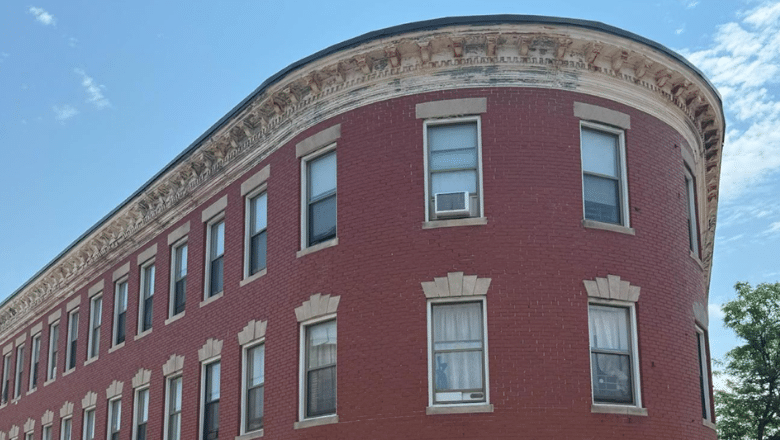
The two buildings in the study present different decarbonization challenges. The Josephine/Geneva building, constructed in 1905, is historic and currently uses gas hot water boilers and radiators for heating, with gas boilers for domestic hot water and mostly gas cooking. The building’s original brick exterior and assumed older insulation make envelope improvements important, but also sensitive.
At 12 Arcadia, the issue is different but no less urgent. The building was constructed in the 1960s and is already largely electric in day-to-day apartment heating, but that electricity is going through older electric resistance heat. For residents and building owners, electric resistance can be a scary long-term proposition: it can be expensive to operate, uncomfortable in extreme weather, and hard to reconcile with a resilient, efficient building plan.
Because both buildings are occupied homes, the planning process had to consider more than equipment performance. Resident comfort, disruption, and day-to-day livability were central to how GreenerU evaluated potential pathways.
Preparing for compliance
In order to comply with the Building Emission Reduction and Disclosure Ordinance (BERDO), Fields Corner CDC came to GreenerU via Boston’s Building Decarbonization Advisor Program (BDAP) to conduct a Zero Over Time study on the two buildings – a combined 47 apartments. Buildings subject to BERDO are required to report annual energy and water consumption and, starting in either 2025 or 2030, comply with building emissions limits that decline over time.
BDAP helps building owners understand what BERDO compliance and long-term decarbonization can look like in real buildings with real constraints.
The pathways to decarbonization
GreenerU’s Zero Over Time plan showed that the two buildings use energy in very different ways. At Josephine/Geneva, natural gas space heating accounts for approximately 60% of energy use. At 12 Arcadia, electric space heating accounts for about 35% of energy use, while natural gas water heating accounts for about 45%.
Those differences shaped the recommended path forward. Across the two buildings, GreenerU identified a package of measures that includes window upgrades, lighting upgrades, envelope improvements, domestic hot water heat pump conversions, gas stove replacement at Josephine/Geneva, and eventual conversion of Josephine/Geneva’s heating system to air-to-water heat pumps. The report also identifies space for rooftop solar on existing roofs, giving Fields Corner CDC another potential tool for reducing emissions and managing future energy strategy.
The plan also shows that progress can happen at more than one scale. Smaller measures, such as lighting upgrades, window improvements, and targeted equipment replacements, can help reduce energy use and prepare buildings for future work. Larger measures, such as envelope improvements and heat pump conversions, carry more complexity and cost, but they also move the buildings more quickly toward long-term compliance, improved comfort, and deeper emissions reductions.
The financing of it all
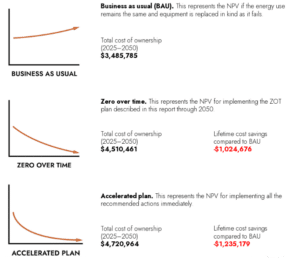
The purpose of a Zero Over Time study is not simply to list potential upgrades or identify where a building might save the most money. It gives decision-makers a practical roadmap, including recommended measures, common funding methods, types of service agreements, potential technology costs, and implementation timing. Instead of treating decarbonization as one large, all-at-once project, the study maps a pathway aligned with equipment life cycles, BERDO requirements, available financing approaches, and practical next steps.
That staged approach is especially important for affordable and low-income housing providers, where capital planning, resident disruption, and compliance risk all have to be managed together. Decarbonization cannot be separated from the lived experience of tenants. A good plan has to ask not only, “What equipment reduces emissions?” but also, “What can be phased responsibly? What protects comfort? What should be coordinated with end-of-life replacement? What needs deeper design before construction?”
BDAP as a funding solution
The City of Boston’s support did not stop at the Zero Over Time plan. Certain eligible participants of the BDAP program are able to take advantage of both Task 1, the ZOT study, and Task 2, grants provided by the City via the federal government to concretely advance decarbonization and BERDO compliance. With GreenerU’s help, Fields Corner CDC was able to obtain $42,500 and use that to offset the costs of solar panels, turning the planning work into a near-term action item.
That partnership made the ZOT process more practical. Rather than leaving Fields Corner CDC with a long list of future upgrades, GreenerU and BDAP helped connect the roadmap to implementation support, giving the organization a way to begin acting on the recommendations while continuing to plan for larger building improvements over time. By the end of 2026, Fields Corner will be generating carbon-free electricity on-site, lowering the cost of operating their buildings while simultaneously meeting BERDO compliance requirements.
Different buildings, shared destination
For Fields Corner CDC, the Zero Over Time report creates a roadmap that respects the fact that no two multifamily buildings decarbonize in exactly the same way. Josephine/Geneva’s path centers on historic-building constraints, gas heating, domestic hot water, cooking, and careful envelope improvements. Arcadia’s path begins with the challenge of older electric resistance heating and the opportunity to replace it with efficient heat pumps.
Both buildings require different solutions, but both pathways lead toward the same destination: BERDO compliance, lower building emissions, and more resilient homes for residents. GreenerU’s plan translates compliance from an abstract emissions requirement into building-specific decisions about where to improve the envelope, when to electrify heating and hot water, where electrical service needs more study, and how solar may fit into the long-term picture.
Just as importantly, both pathways recognize that decarbonization should support the people living in the buildings, improving comfort and resilience while keeping implementation realistic for occupied housing.
The result is a practical decarbonization story rooted in place. In a historic Dorchester neighborhood, Fields Corner CDC can preserve affordable housing, improve indoor environments, and plan for a lower-emission future one carefully sequenced step at a time.
Recent Case Studies
For buildings like 28-40 Washington, decarbonization is about both preserving historic character and improving residents' quality of life.
More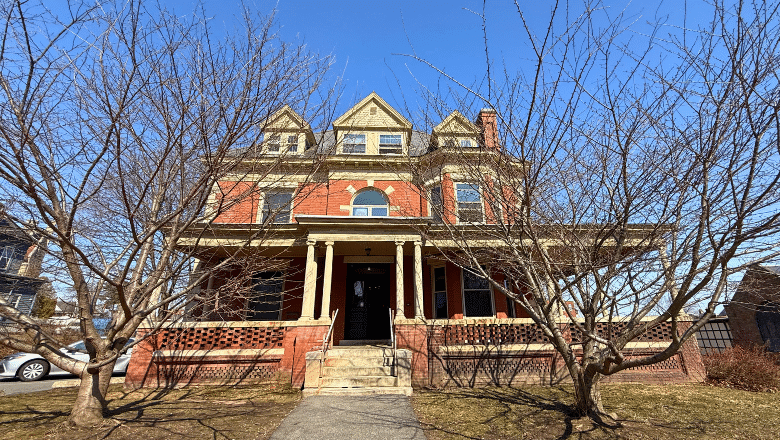
In Holyoke, Massachusetts, a 6-unit multifamily building takes advantage of a no-cost decarbonization design study to see how it can improve its building's efficiency.
More
At Sister Clara Muhammad Housing Cooperative, the property owner didn’t have to choose between affordable and ambitious–GreenerU’s decarbonization design study made both possible.
More